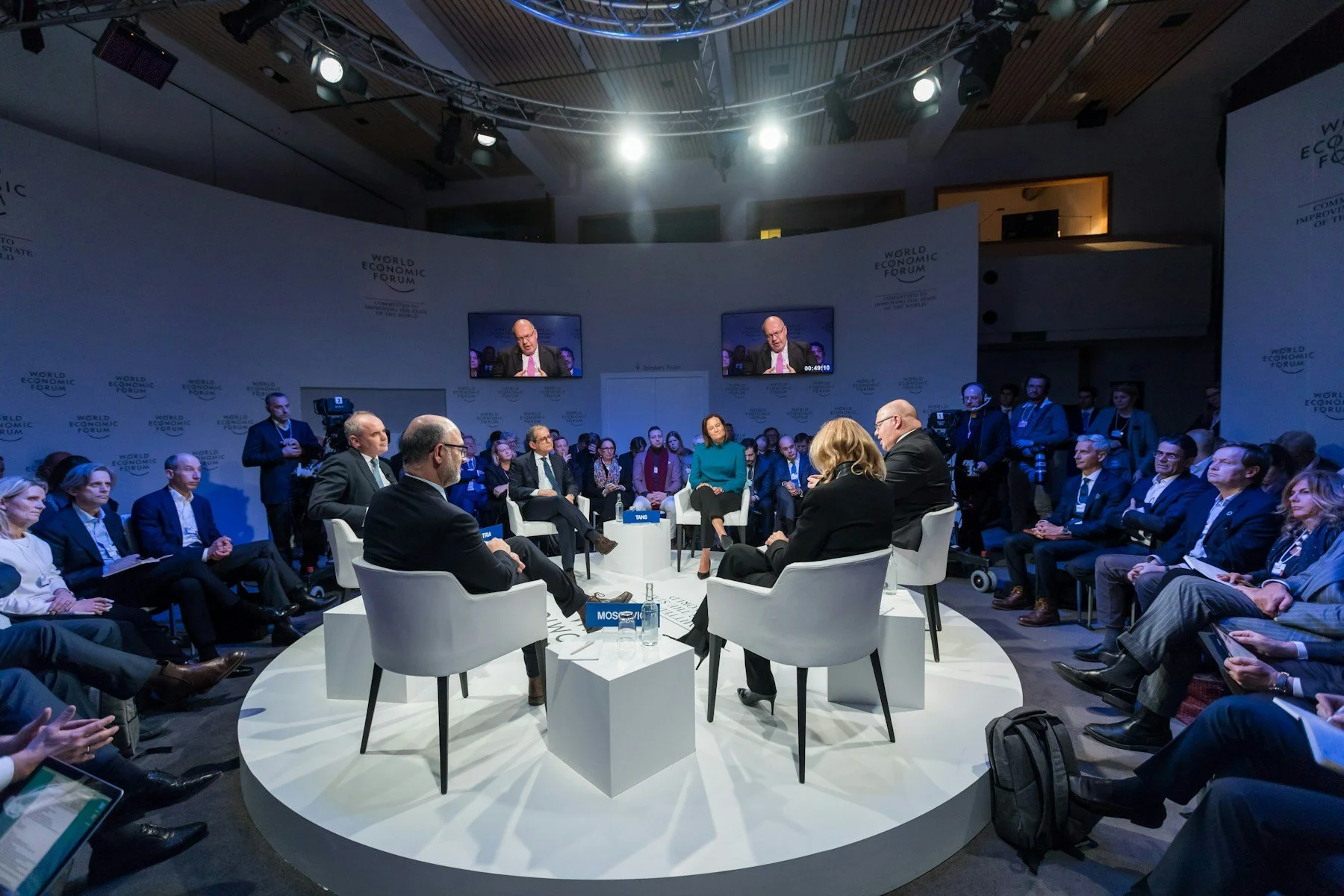
A useful event gives people an opportunity to do something together that would be difficult to achieve through another email or a presentation watched alone. They can question an idea, hear how colleagues interpret it and work through what it means in practice. That is why I believe events still deserve a place in an organisation's communications and engagement plans.
The case needs to be made carefully. Bringing people together asks for their time, attention and often travel. A full room and a polished stage tell us that an event happened. We still need to understand whether the experience helped the people attending and supported the organisation's purpose.
My work brings together strategic communications, engagement and delivery, including live events and employee experiences. I am interested in the connection between the message an organisation wants to communicate and the experience people actually have. An event can make that connection tangible when its design begins with the audience.
For me, the useful question is what people will be able to understand, discuss or do because we brought them together. That question applies to a leadership conference, a small team workshop and an online gathering. The scale changes, but the need for a clear reason remains.
Shared attention has a practical value
Working days can involve moving between messages, meetings and competing deadlines. Asking people to read another update may be entirely appropriate, especially when the information is straightforward. Some subjects, however, benefit from protected time in which people can concentrate on the same issue and hear each other's questions.
An event creates the possibility of that shared attention. It can give a leadership team time to examine an important decision with the people who will implement it. It can also help colleagues compare assumptions that would otherwise remain hidden inside separate functions or local ways of working.
That possibility depends on the programme. If an agenda contains uninterrupted presentations and leaves questions until the last few minutes, it may offer little room for the audience to contribute. I would build the conversation into the running order and protect it as carefully as the opening address.
Consider a session about a new customer process. A demonstration can establish the proposed approach, followed by small groups working through a realistic enquiry. The discussion then reveals where responsibilities are unclear or where the proposed process does not fit the work people actually encounter.
People need room to ask the awkward question
A written message can be carefully worded and still leave uncertainty. Someone may understand the overall direction but be unsure about a specific consequence for their team. Hearing a colleague ask a similar question can help them recognise that their concern is shared and worth exploring.
Leaders have a useful role here. They can explain the reasoning behind a decision, acknowledge what remains undecided and listen to what people raise. Credibility depends partly on how those exchanges are handled, particularly when an answer is inconvenient or cannot be provided immediately.
I would prepare the question process before the event. People need to know how they can contribute, whether questions can be submitted anonymously and what will happen to issues that cannot be resolved in the room. A clear route makes participation easier for people with different levels of confidence.
The response matters after the microphone moves on. If a question needs investigation, record it, assign responsibility and agree when an answer will be shared. This gives the organisation an opportunity to demonstrate that listening has a practical consequence, rather than becoming a brief feature of the programme.
Relationships help work move between teams
Many delivery problems sit between functions. One team depends on a decision from another, or a handover fails because the receiving team has different expectations. A well-designed gathering can help people understand those connections and meet the colleagues involved before a problem becomes urgent.
Simply putting people in the same building does not guarantee useful conversations. Someone attending alone may find an unstructured networking break difficult to enter. People who already know each other may naturally stay together, leaving important connections across the organisation largely unchanged.
I would give those conversations a sensible starting point. A table discussion built around a shared customer problem can introduce colleagues through their work. A facilitated exchange between two functions can explore what each needs from the other, with enough detail to identify a practical improvement.
For example, an operations team and a communications team might compare what happens when a service changes at short notice. Understanding who knows what, and when, can produce a more useful outcome than asking everyone to exchange contact details and hoping collaboration follows later.
Participation can turn a message into understanding
There is a difference between hearing a strategy and being able to apply it to a real choice. Events can help people make that connection through examples, discussion and practice. The activity should have a clear relationship to the work, so participants can see why they are being asked to take part.
For a leadership event, that might mean working through a decision that reflects competing priorities. For a service team, it could involve testing how a new approach changes a customer conversation. The aim is to make the implications clearer and surface the support people need to act confidently.
Facilitation makes a difference. Participants need enough context to begin, a question they can answer and a clear explanation of how their contribution will be used. An activity becomes frustrating when people are asked to solve an undefined problem or make choices that have already been closed elsewhere.
Where there is genuine scope to influence a decision, say so. Where the decision is settled and the discussion concerns implementation, explain that boundary too. People can contribute usefully to either conversation when they understand what is open and what responsibility they are being asked to take.
Choose the format around the people and purpose
An event can be in person, online or a combination of both. I would choose the format after understanding the audience, the intended outcome and the constraints. A short online workshop may be the right way to resolve a focused issue across locations without creating unnecessary travel.
An in-person gathering may suit work that benefits from sustained discussion, practical demonstrations or building connections across unfamiliar groups. That still requires a realistic assessment of the time and cost involved. The reason for meeting should be clear enough that participants can understand why they have been invited.
Hybrid delivery needs deliberate design. A remote participant should have a workable way to hear, contribute and follow the discussion. If room conversations cannot be heard online, or questions from remote colleagues are overlooked, the organisation has created very different experiences under the same event title.
Plan accessibility early. Ask about relevant requirements, consider captions and hearing support, and provide clear information about the venue or platform. Breaks, readable materials and different ways to contribute help people take part. These decisions belong in the initial brief because they shape the experience itself.
Make the reason to attend clear before the day
The invitation begins the event experience. Explain who the session is for, what people will work on and what they should expect to take away. A clear purpose helps someone decide how to prepare and makes it easier for their manager to protect the time needed to attend.
Preparation should be proportionate. If a short document will help participants arrive with useful questions, share it with enough notice and explain which parts matter. Sending a large pack without guidance can make preparation feel like an additional task rather than a practical contribution to the discussion.
Think about who is missing as well as who is attending. Shift patterns, caring responsibilities and customer-facing work can prevent people from joining a single session. Decide how those colleagues will receive relevant information and contribute their experience, rather than assuming the invitation itself provides equal access.
This is where the event connects with the wider communications plan. Briefing managers, sharing background material and setting expectations beforehand can help the live conversation begin at a more useful point. The event then becomes part of an ongoing exchange instead of carrying every message on its own.
Good delivery gives the conversation room to work
Purpose and production need to support each other. People can struggle to engage if they cannot hear a speaker, find the right room or understand the instructions for an activity. Reliable delivery allows them to spend their attention on the subject and the people around them.
A practical running order should reflect how the session will actually work. Include time for movement, questions and transitions, and be realistic about how long an activity needs. An agenda that is already full on paper leaves little room to respond when a useful discussion takes longer than expected.
Rehearsals can test meaning as well as technology. Does the opening explain why the audience is there? Are speakers repeating each other? Does a facilitator know what should be captured from the discussion? These checks can reveal problems while there is still time to make a useful adjustment.
Agree how decisions will be made during delivery. If a session overruns or a technical problem occurs, the team needs to know who can adjust the programme. Clear roles and proportionate contingency planning make it easier to preserve the purpose of the event when circumstances change.
Decide what a worthwhile result would look like
Before committing the budget, describe the result you hope the event will support. That might be a clearer understanding of a strategic choice, stronger working relationships between specific teams or a set of decisions that allows delivery to continue. Choose evidence that relates to that purpose.
Attendance and immediate feedback can tell you something about the experience, but they have limits. A participant can enjoy the day and still be unsure what to do afterwards. Ask questions that reveal understanding and intended action, then follow up where the outcome depends on behaviour at work.
For a workshop about a new process, you might examine whether participants can explain the handover and identify where to get support. Later, the organisation can look at whether the agreed handover is being used. This creates a more grounded discussion than treating a positive satisfaction score as proof of change.
Be careful about attribution. An event sits alongside management decisions, operational support and other communications. It may contribute to an improvement without being its sole cause. A credible evaluation recognises that context and uses what was learned to improve the next activity or the support around it.
The follow-up is part of the event
Participants should leave with a clear sense of what happens next. Share decisions and unresolved questions in a format people can use, with named responsibility where action is required. A recording can be helpful, but people may also need a concise explanation of the points relevant to their work.
Equip managers to continue the conversation with their teams. Give them practical context and a small number of useful questions, especially where colleagues attended different sessions or could not join. That helps the organisation connect the shared experience with the everyday conversations through which work gets done.
Protect the commitments made during the event. If leaders promised an answer, or teams agreed an improvement, make progress visible. Even a short update explaining that something is taking longer than expected can support a more honest relationship than allowing the subject to disappear when the event closes.
Events matter to me because they can create the conditions for people to understand each other and make progress together. Their value comes from how thoughtfully we use that opportunity. A clear purpose, useful participation and dependable follow-through give the time together a reason to matter afterwards.
Let us discuss your next event or engagement programme
If you are planning a leadership event, an employee gathering or a wider engagement programme, I can help connect the purpose, communications and delivery. Get in touch for a chat about the audience, the outcome you need and how to create an experience that supports it.